
How to get to Antibes: plane, train, bus or car
Getting to Antibes is easier than many first-time visitors expect. The town has its own station served by high-speed TGV trains, sits about 20 km (12 miles) from Nice Côte d’Azur Airport and has a dedicated exit on the A8 motorway. This guide compares every way of arriving, from a direct flight out of London to a Eurostar and TGV journey, with journey times and fares checked in October 2026. It will help you choose according to where you are starting from, your budget and the part of town where you are staying, and it shares the small details that save time on arrival, from the right bus stop to the station closest to your accommodation.
The best way to reach Antibes from where you are starting
The right choice mostly depends on how far you are travelling. From the UK and North America, flying into Nice is the natural option, followed by a short transfer. From Paris, the direct train is the most comfortable way to travel, from one city centre to the other. Along the Riviera itself, local trains run beside the sea and drop you a short walk from the old town.
| Starting point | Recommended option | Typical journey time | Indicative budget |
|---|---|---|---|
| London, by air | Direct flight to Nice, then transfer | About 2h flight, plus 25 to 48 min | Varies with the airline and season |
| London, by rail | Eurostar, then TGV via Paris | From about 9h10 | Varies with booking date |
| New York | Direct flight to Nice | Overnight flight | Varies with the airline and season |
| Paris | Direct TGV INOUI or OUIGO | 5h15 to 5h35 | OUIGO from €19 |
| Lyon | Direct TGV INOUI or OUIGO | 3h35 to 4h35 | OUIGO from €10 |
| Marseille | Local TER or direct TGV INOUI | About 2h15 to 2h20 | TGV INOUI from €33 |
| Nice airport | Bus 82, local train or taxi | 25 to 48 min | €11 by bus, about €72 by taxi |
| Nice or Cannes | Local TER train | 10 to 25 min | A few euros |
| Italy, via Ventimiglia | Local TER train | About 1h30 | A few euros |
These figures are a starting point for comparison. Train fares change with the booking date, and road journeys take noticeably longer in July and August.
Whichever way you travel, you will almost always arrive through one of three gateways. Antibes station, right in the centre, welcomes TGV, local and night trains. Next door, the Pôle d’échanges bus hub brings together the airport bus, long-distance coaches and the local Envibus network, which makes onward connections simple. Drivers, meanwhile, leave the A8 at exit 44, which serves Antibes, Juan-les-Pins, Vallauris and Sophia Antipolis. Keeping these three landmarks in mind is enough to find your bearings within minutes of arriving.
Which airport to fly into for Antibes
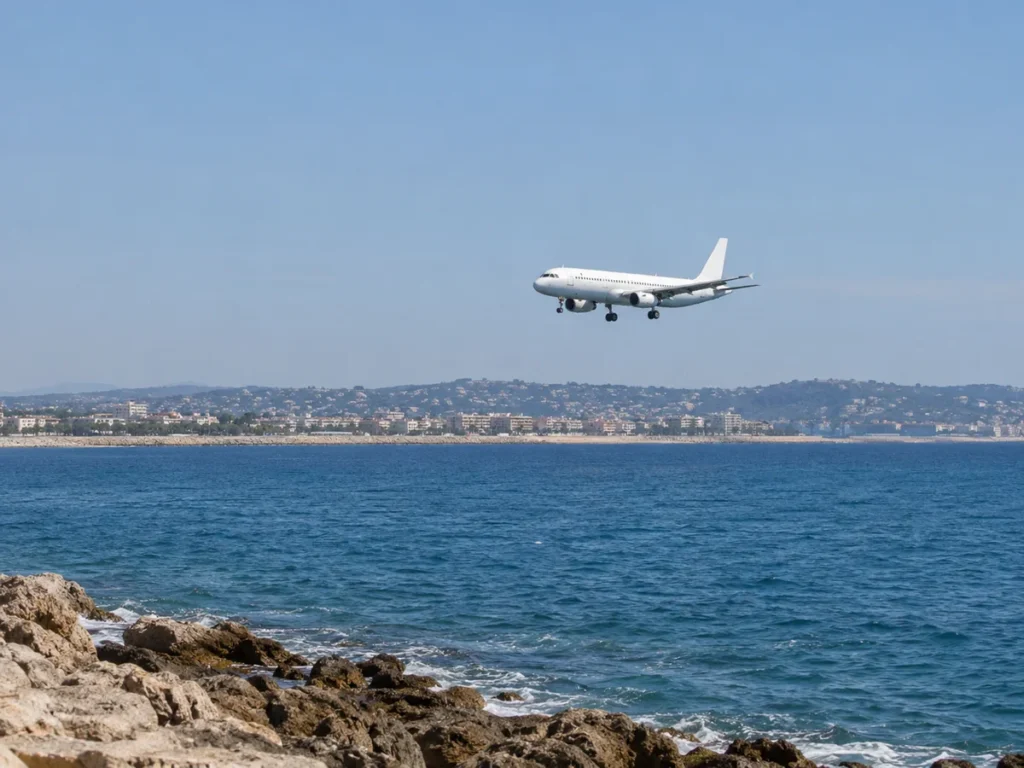
Scheduled flights for Antibes land at Nice Côte d’Azur Airport, around 20 km (12 miles) away. It is one of the busiest airports in France, with two terminals and a dense network across Europe. From London, flights take roughly two hours: British Airways flies from Heathrow and Gatwick, and easyJet adds frequent departures from Gatwick, with more than 40 weekly flights on the Gatwick route alone. Your arrival terminal depends on your airline, and our comparison of the most convenient airport for Antibes shows which option saves the most time for your type of trip.
Travellers from North America also have direct options. In summer 2026, Nice offered 15 long-haul routes, including seven to the United States, from New York JFK and Newark to Boston and Philadelphia, according to Milesopedia’s overview of Nice’s long-haul summer. Most of these routes are seasonal, so winter visitors usually connect through Paris, London or another European hub.
Cannes-Mandelieu Airport, about 18 km (11 miles) from Antibes, plays a very different role. It handles business aviation and private jets only, and passengers usually reach Antibes in 25 to 35 minutes with a pre-booked chauffeur. When fares to Nice climb in peak season, Marseille Provence Airport, about 200 km (125 miles) away, can work for a longer stay with a hire car.
Getting from Nice airport to Antibes
Three options are waiting for you when you land, each suited to a different kind of traveller. The bus wins on price, the train on reliability and the taxi on comfort, so the choice comes down to how much luggage you carry and what time your flight lands.
The Zou! bus 82 is the simplest direct link. It leaves from Terminal 2 (exits A1 or A3, bay 3), stops at Terminal 1, then reaches the Pôle d’échanges in Antibes in 28 to 48 minutes depending on traffic. The official line 82 timetable, valid since 2 June 2026, lists 19 daily departures between 7.30am and 9.55pm. A single ticket costs €11 online or at the ticket office, and €11.40 on board.
The local train suits light travellers heading for the town centre. From Terminal 1 (exit A0), Nice Saint-Augustin station is about a seven-minute walk. From Terminal 2, trams 2 and B run free of charge to the Grand Arénas stop next to the station. The airport’s rail access page shows trains on the Cannes, Nice and Monaco line roughly every 15 minutes on weekdays, and Antibes is then about 20 minutes away.
Taxis and ride-hailing cars offer door-to-door comfort, ideal with suitcases or children. Taxi ranks sit outside exit A3 at both terminals. Expect around €72 to Antibes or Juan-les-Pins, excluding supplements, for a 25 to 40 minute ride. An app-booked ride usually costs closer to €40, with the fare shown before you confirm.

Taking the train to Antibes from London or Paris
Travelling by rail from London is a real alternative to flying, especially for those who enjoy watching France roll past the window. The SNCF Connect London to Antibes timetable lists five daily routes, the fastest taking about 9h10. Every route combines a Eurostar from London St Pancras to Paris Gare du Nord with a TGV from Paris Gare de Lyon, so allow time to cross Paris by metro or RER between the two stations. Leaving London around lunchtime still gets you to Antibes the same evening.
From Paris, direct TGV INOUI trains reach Antibes in 5h15 at best, while OUIGO low-cost trains take around 5h35, with adult fares from €19 and a fixed €8 child fare. The difference between the two mostly comes down to included luggage and ticket flexibility, two decisive points when choosing your train to Antibes from Paris. An overnight Intercités train also leaves Paris Austerlitz around 9pm and arrives in Antibes around 8.45am without changing, which saves a hotel night.
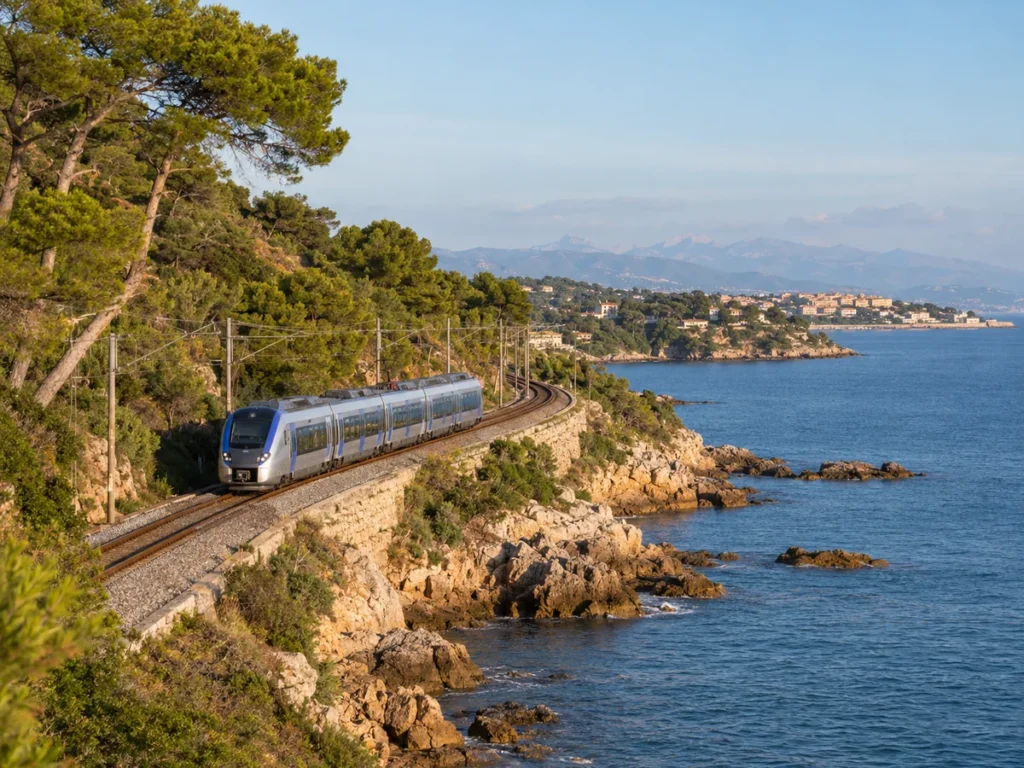
Once on the Riviera, local TER trains run frequently along the coast. Cannes is 10 to 15 minutes away and Nice about 25 minutes. Since every one of these trains stops in the town centre, Antibes station and its SNCF TER services make an ideal base for exploring the coast without a car. The same line continues east through Monaco to Ventimiglia in Italy, about 1h30 away, and a day in the principality is easy to plan with the Antibes to Monaco comparison of train, bus and car.
Which station to get off at depending on where you stay
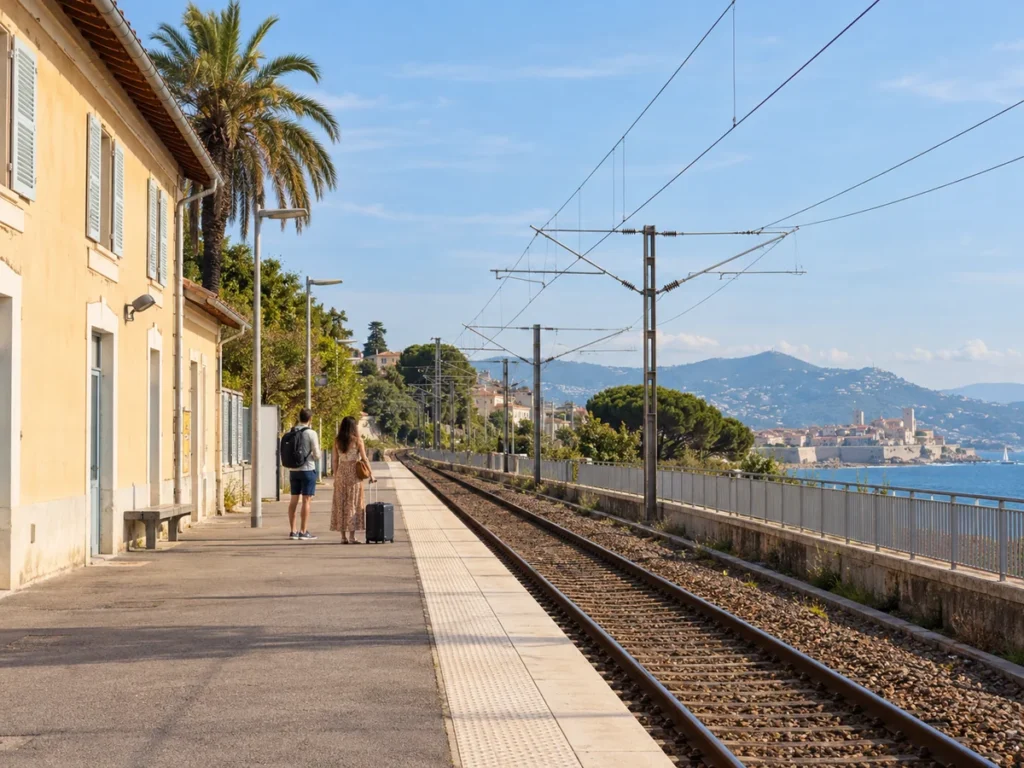
The Antibes area has three railway stations, and picking the right one saves you a transfer at the end of a long journey. Antibes station is the only one served by TGV and night trains. Juan-les-Pins and Biot are served by local TER trains, which means a quick change if you are coming from further afield.
Antibes station suits most stays. It sits in the town centre, around ten minutes on foot from Old Antibes, the Provençal market and Port Vauban. For the Cap d’Antibes peninsula, Envibus buses take over from the bus hub next door.
Juan-les-Pins station puts holidaymakers closest to the sandy beaches, the Gould pine grove and the seafront hotels. If you arrive by TGV, simply hop on a local train at Antibes for one stop, or finish the last few kilometres by bus or taxi.
Biot station stands in the seaside La Brague area, close to Marineland and the holiday residences nearby. The hilltop village of Biot, further inland, is then reached by bus. This station also suits visitors staying in the hills between Biot and Vallauris, where buses from Antibes to Biot and Vallauris continue right into the heart of each village.
Travelling to Antibes by coach or bus
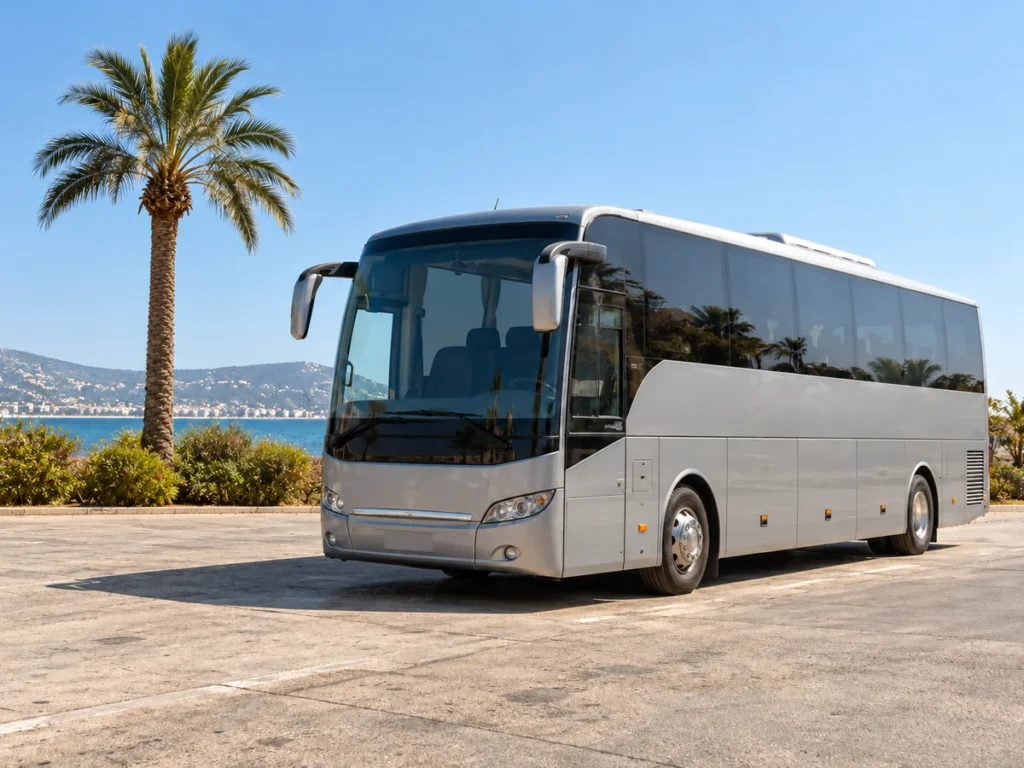
Long-distance coaches appeal to travellers on a budget and to those starting from cities where the train involves a change. FlixBus and BlaBlaCar Bus both serve Antibes, with fares that can be very low when booked early. According to FlixBus’s Antibes stop page, coaches stop at the Pôle d’échanges, 17 boulevard Général Vautrin, at bays 11 or 12, with fares from €7.48 depending on your departure city. Lyon, Grenoble and Toulon are among the most popular routes. The journey takes longer than by train, in exchange for a gentler price.
Across the Côte d’Azur, regional Zou! bus lines complement the train along the coast. They are most useful if you are staying away from a station or prefer a ride without changes. Before choosing between bus and train for the short hop east, the Antibes to Nice guide by train, bus or car compares journey times and fares side by side. Heading west, the Antibes to Cannes comparison plays the same role and is particularly handy during the big Cannes events.
Once in Antibes, the Envibus network covers the last stretch to residential areas, the Cap and neighbouring towns. It also serves the Sophia Antipolis technology park, and business travellers or students arriving for a meeting often catch the bus from Antibes to Sophia Antipolis straight from the bus hub, right after stepping off their train or coach.
Driving to Antibes by motorway or along the coast
The A8 motorway, nicknamed La Provençale, is the main route for drivers. Everything happens at exit 44, which serves Antibes, Juan-les-Pins, Vallauris, Golfe-Juan and Sophia Antipolis, and drivers coming from the west pass the Antibes toll plaza just before it. British motorists who cross the Channel to Calais face a drive of around 1,200 km (about 745 miles), roughly 11 to 12 hours at the wheel, so most split the trip with a night halfway. From Paris, allow about 930 km (580 miles) via the A6, A7 and A8, and from Marseille about 200 km (125 miles), roughly two hours in normal traffic. French motorways are tolled, and UK cars need a UK identifier displayed at the rear.
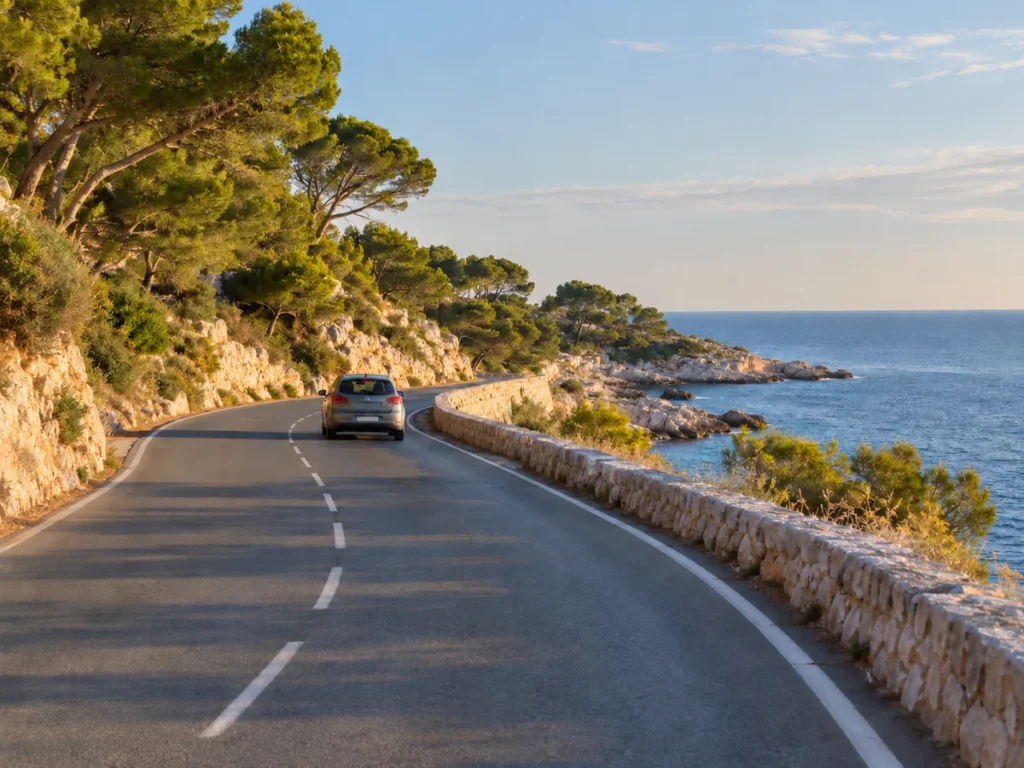
From Nice or the airport, the coast road makes a lovely alternative. The RD 6098 follows the shoreline through Saint-Laurent-du-Var and Villeneuve-Loubet, with the sea in view for much of the way, while the inland RD 6007 serves as a backup when the coast road is busy. Good news for visiting drivers: Nice’s low-emission zone currently applies only to the oldest heavy goods vehicles, buses and coaches, as the City of Nice’s low-emission zone page explains.
Summer brings a different rhythm. Saturdays in July and August are rated red nationwide, and the A8 gets busy late in the day, so the Bison Futé 2026 traffic calendar is worth a look before you set off. Arriving by train and picking up a car locally often combines the best of both worlds, with agencies offering car rental in Antibes close to the station, and checking the main parking options in Antibes in advance saves precious time on arrival.
Arriving in Antibes by boat
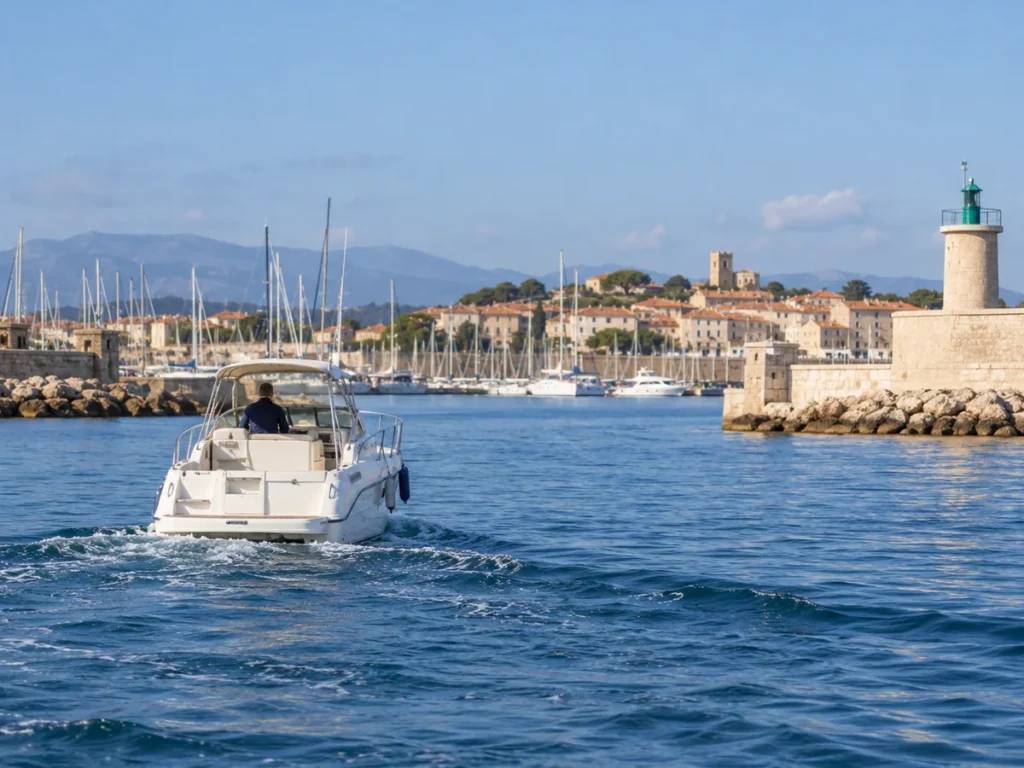
Sailing into Antibes is one of the most memorable ways to reach the Riviera, and the town is made for it. Port Vauban, beneath the ramparts and the star-shaped Fort Carré, offers 1,475 berths according to the Figaro Nautisme harbour guide. Its superyacht basin has 18 quayside berths for vessels from 70 to 165 metres, which makes it a landmark stopover for some of the largest yachts in the Mediterranean.
Visiting sailors contact the harbour office before arrival, on VHF channel 9 or by phone, to request a visitor berth subject to availability. Demand peaks in July and August, and booking ahead lets you arrive with peace of mind and a confirmed spot right next to the old town.
Travellers on foot can enjoy the sea too during the warmer months. From roughly May to September, several operators link the harbour with Cannes, Golfe-Juan, Monaco or Saint-Tropez, with return trips usually costing between €15 and €40. Arriving this way from Cannes or Monaco turns the journey into a mini cruise, and the timetables, quays and excursions of Port Vauban and its maritime shuttles let you step straight off the boat into a stroll through Old Antibes. For Corsica, ferries sail from Nice, Toulon or Marseille, and Antibes is then an easy train ride or drive along the A8.
Choosing your transport for summer, late arrivals or family trips
The same journey can feel very different depending on the season, your arrival time or who is travelling with you. A few simple habits help you adapt, and they often matter more than the price gap between two options.
In July and August, the train has a clear edge. It arrives in the town centre on schedule, far from A8 slowdowns and the hunt for a parking space. Booking your TGV several weeks ahead secures the best fares, especially on OUIGO, and the same applies to Eurostar seats from London. If you are driving, a Friday morning or Sunday departure usually gives a smoother run than the busy changeover Saturdays.
For a late arrival, keep the last departures in mind. The final bus 82 leaves Terminal 2 at 9.55pm. Trains on the Cannes, Nice and Monaco line then run about every 30 minutes until 11.30pm from Nice Saint-Augustin, with extended service overnight from Saturday to Sunday. After midnight, a taxi or a chauffeur booked in advance takes over with complete peace of mind, a handy option for late flights from the UK.
With children or lots of luggage, door-to-door transport makes everything easier. A taxi or minivan booked at the airport takes you straight to your accommodation, buggies and suitcases included. On the budget side, trains stay good value for families with a fixed €8 child fare on OUIGO, and bus 82 is free for under-fours and half price from 4 to 11.
Many visitors also discover that a completely car-free stay is entirely realistic. Between local trains, regional buses and boat shuttles, day trips from Antibes without a car cover Nice, Cannes, Monaco, the Lérins Islands and several hilltop villages, leaving car hire for the odd day in the hinterland.

Frequently asked questions on how to get to Antibes
Does Antibes have an airport?
Antibes relies on Nice Côte d’Azur Airport, about 20 km (12 miles) away, which handles all scheduled flights. Cannes-Mandelieu Airport, around 18 km (11 miles) away, serves business aviation and private jets. From Nice airport, bus 82, the local train or a taxi reaches Antibes in 25 to 48 minutes.
Can I get to Antibes by train from London?
Yes. Take the Eurostar from London St Pancras to Paris Gare du Nord, cross Paris to Gare de Lyon, then board a TGV to Antibes. The fastest combinations take about 9h10, and a midday departure from London still arrives the same evening.
Does the TGV stop in Antibes?
Yes, Antibes station is served by direct TGV INOUI and OUIGO trains from Paris Gare de Lyon, as well as the overnight Intercités train from Paris Austerlitz. Juan-les-Pins and Biot stations are served by local TER trains.
What is the cheapest way to get from Nice airport to Antibes?
The Zou! bus 82 costs €11 when bought online or at the ticket office and runs 19 times a day from Terminal 2. The local train from Nice Saint-Augustin station, a short walk from Terminal 1, is another budget-friendly option and reaches Antibes in about 20 minutes.
Are there direct flights from the United States to Nice?
Yes, mainly in summer. In 2026, Nice offered direct routes to several US cities, including New York, Boston and Philadelphia, and one business-class-only service to Newark continues through the 2026/2027 winter season.
Is there a night train to Antibes?
Yes, the Intercités night train leaves Paris Austerlitz around 9pm and arrives in Antibes around 8.45am without changing, saving a hotel night and giving you a full first day on the Riviera.
When is the best time to drive to Antibes in summer?
Saturdays in July and August are the busiest days on French motorways. Leaving on a Friday morning or a Sunday usually makes for a calmer drive, and the Bison Futé calendar highlights the best days to travel.

