Boat rental in Antibes: with or without a licence

Boat rental in Antibes suits every kind of visitor: anyone can take the helm of a boat with an engine of up to 6 hp (4.5 kW), while a coastal licence or a skipper opens the door to faster, roomier boats. Most rentals leave from Port Gallice, in Juan-les-Pins, and from Port Vauban, just below the old town. Budget from around €70 for half a day and €180 for a full day on a small boat, and more for a RIB or a skippered trip. This guide explains which formula to choose, how foreign licences are treated, how to reach the right marina from Nice Airport and where to sail once you are afloat.

Do you need a licence to rent a boat in Antibes

The answer depends on engine power, not on the size of the boat. France’s Ministry of the Sea sets the threshold at 4.5 kW, which equals 6 hp. Up to that power, anyone can steer. Above it, the person at the helm must hold a French recreational boating licence or a title recognised as equivalent.

That single rule gives visitors to the Riviera three clear options:

  1. Hire a licence-free boat of 6 hp or less, listen to a 10 to 15 minute briefing and set off on your own.
  2. Hire a faster RIB or open boat when someone in your group holds a suitable licence.
  3. Hire any boat together with a professional skipper, which settles the licence question for the whole group.

Sailing boats follow a different logic. According to the ministry, sailing at sea remains open to everyone, although owners ask for solid experience or a nautical CV before handing over a 10 m yacht or a catamaran.

Most first-time visitors pick option 1 or option 3. A licence-free boat delivers independence and a modest budget, while a skipper brings range, comfort and local knowledge of the coves. Option 2 suits experienced skippers who enjoy speed, and the foreign licence section further down explains how your own certificate fits in.

Licence-free boats and what six horsepower really gets you

A licence-free boat is a small open boat, usually 4 to 6 m long, that carries 4 to 7 people. One recent listing at Port Gallice gives a good picture of the standard package: a 4.8 m open hull, a 6 hp four-stroke engine, five passengers at most, a rental window from 10:00 to 19:00, a deposit of around €1,000 and a fuel package of roughly €10 for half a day or €20 for a full day.

Six horsepower sets a gentle pace, and that suits the sheltered coves between Juan-les-Pins and the Cap d’Antibes. From Port Gallice, the Bay of Billionaires lies less than 20 minutes away. The engine burns around 2 litres an hour at full throttle, so fuel remains a small line in the budget and the day can stretch from the first swim to the last light of the afternoon.

Range depends on the renter. Many operators keep licence-free boats inside the bay, while some allow the crossing to the Lérins Islands after the briefing. Ask the question before you book, and plan the day around swim stops, snorkelling and a picnic at anchor. A typical outing combines three or four hours of cruising with a long lunch stop, then a return to the marina before the sea breeze picks up in the afternoon.

Using a UK, US or other foreign boating licence in France

Why the flag of the boat matters

Boats for hire in Antibes fly the French flag, so French rules apply to whoever steers, whatever their nationality. The French ministry states the principle clearly: on a French-flagged boat, French regulations on licences apply. A visitor therefore cannot rely on the rules of their home country alone.

ICC and national licences

The ministry also confirms that there is no international maritime licence for recreational boating. The International Certificate of Competence, known as the ICC, helps in practice, and the RYA notes that it is widely recognised as evidence of competence even though France does not formally accept it. Rental companies therefore judge each case on its own merits. Many welcome an ICC or a national certificate from the UK, the US or another country, and some ask for extra proof of experience.

How to avoid surprises

Send a clear copy of your licence to the owner before you pay a deposit, and ask for written confirmation that it covers the boat you have chosen. Bring the original on the day, together with photo ID. French authorities can issue a French licence by equivalence for certain foreign titles, but that procedure is designed for residents rather than holidaymakers. When the paperwork looks uncertain, a boat with a skipper keeps the day on track, because the professional on board holds the right French qualification.

Skipper or bareboat, which suits a first visit

A bareboat is a boat you steer yourself, and a skippered boat comes with a professional at the helm. Each formula shapes the day differently, so the table below sets the practical points side by side.

Licence-free boatRIB with your own licenceBoat with skipper
Who steersYou, after a short briefingYou, as licence holderA professional
Best forCouples and families on a gentle dayExperienced skippers who enjoy speedFirst visits, larger groups, sunset trips
Typical group4 to 7 people8 to 12 people6 to 12 people
RangeThe bay and nearby covesBay, cape and Lérins IslandsThe whole coast
DepositAround €1,000€2,000 and moreOften waived
ExtrasFuel package of €10 to €20Fuel by the litreSkipper from about €250 a day on top of the boat

For a first visit, the skipper formula delivers the most relaxed day. The owner often steers personally and knows the coves of the Cap d’Antibes, the passages between the islands and the stretches where anchoring is prohibited. You swim, eat and enjoy the scenery while someone else watches the weather, the traffic and the depth.

A licence-free boat remains the best pick for a small group that values independence. It costs less, gives the freedom to choose each stop and creates a real sense of adventure in the bay. A useful rule of thumb: the larger the group and the longer the planned route, the more a skipper or a licensed helmsman pays off. For four or five people drifting around the cape for half a day, 6 hp is plenty.

Choosing between Port Vauban, Port Gallice and Golfe-Juan

Three marinas handle most rentals around Antibes, and each one fits a different kind of day.

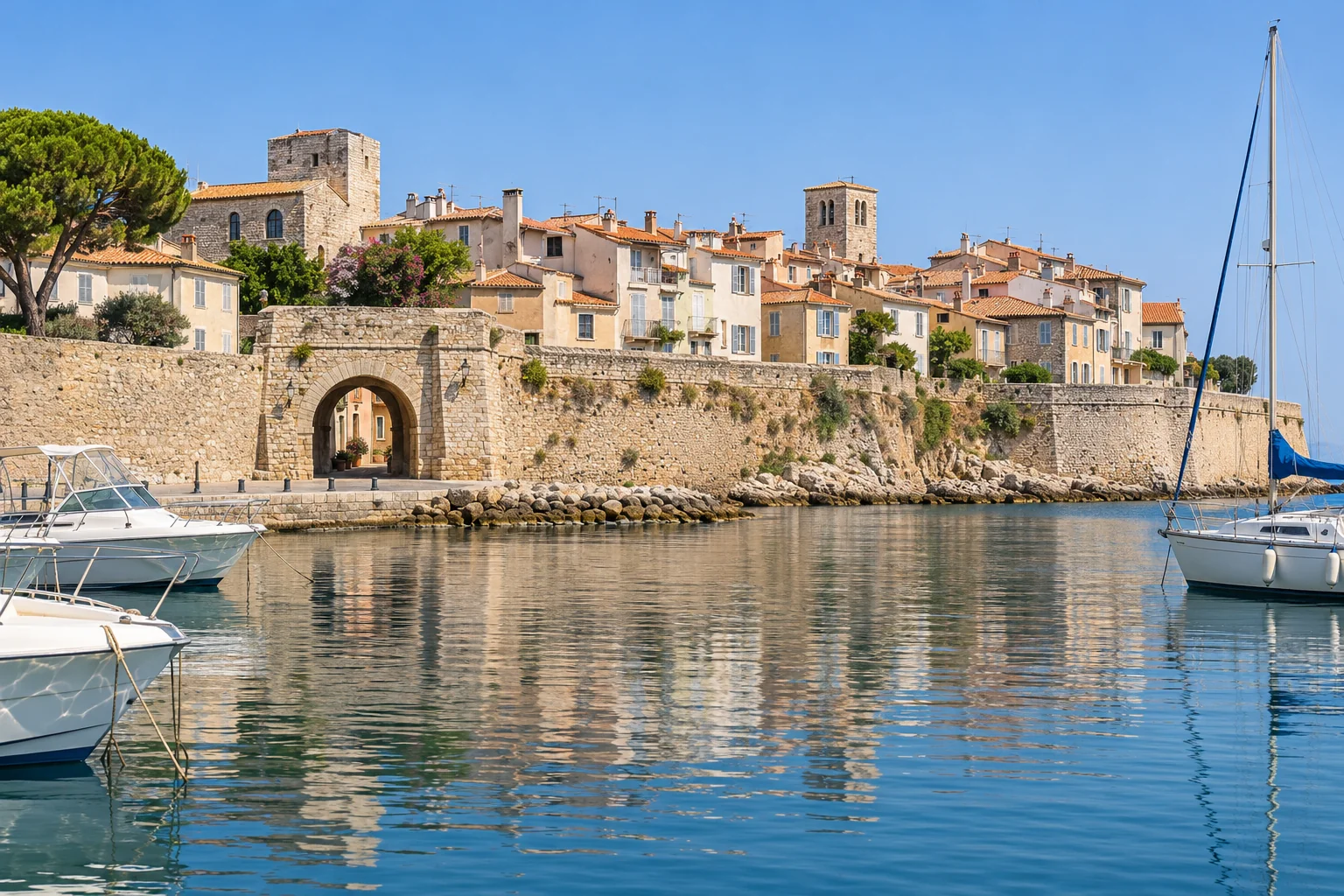
Port Vauban sits between the old town and the ramparts, about ten minutes on foot from the railway station. Many skippered trips and several RIBs leave from here, and the Bay of Billionaires lies roughly 2.3 nautical miles away, around 10 minutes by boat. Visitors who like to combine a boat day with a coastal hop can also use the seasonal maritime shuttles from Port Vauban, which link the harbour with Cannes, Golfe-Juan and Monaco.

Old Antibes ramparts and boats moored in Port Vauban

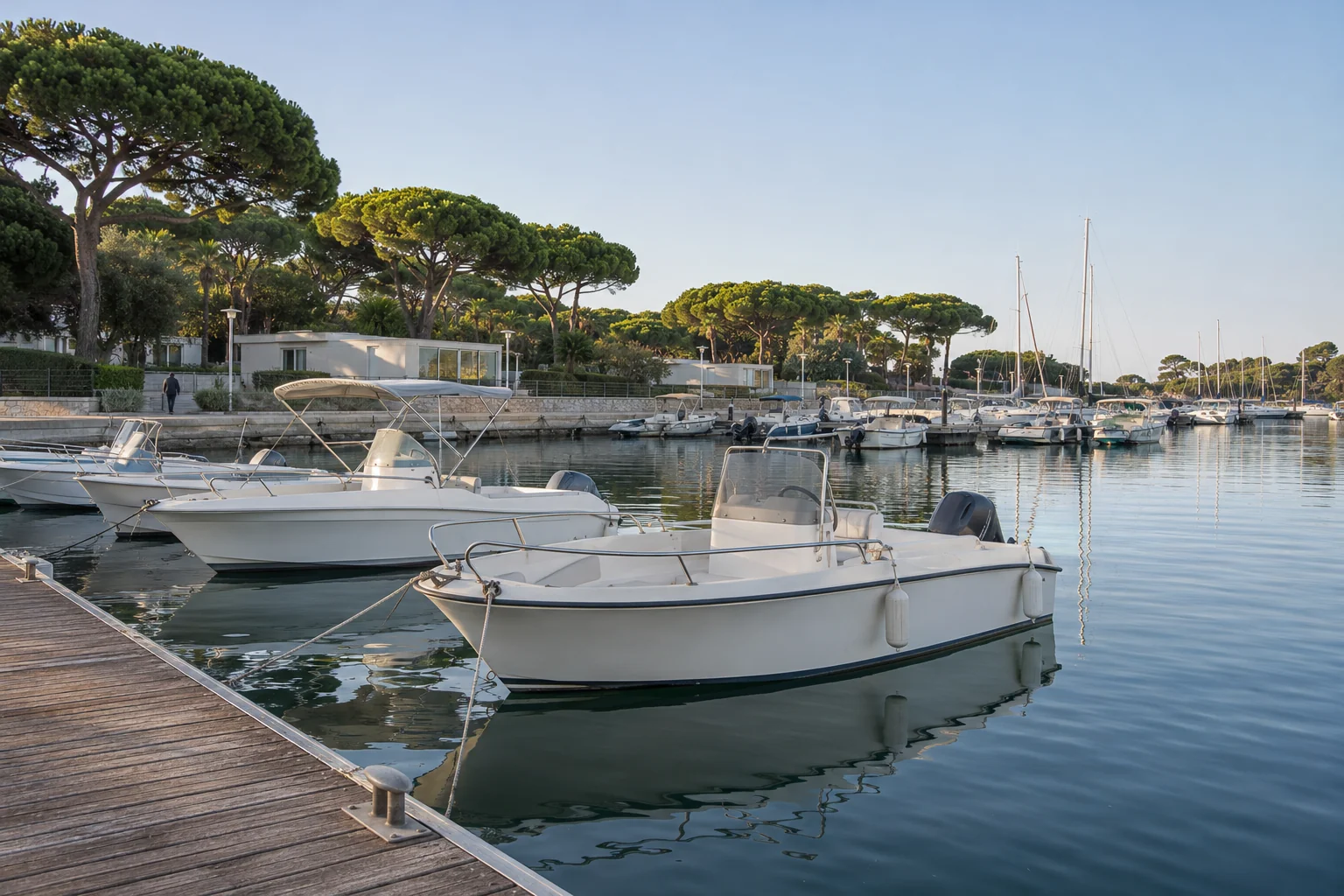
Port Gallice, in Juan-les-Pins, offers the calmest water of the three. The harbour is well protected from the wind, hosts most of the licence-free rental companies and has a car park of around 500 spaces on site. Choose it for a first outing with children or for a relaxed day in the bay.

Sheltered Juan-les-Pins marina with small boats moored in the morning

Golfe-Juan, in Vallauris, is the best launch point when the Lérins Islands are the goal, because the crossing is noticeably shorter than from Port Vauban. Its old harbour offers inflatable boats without a licence and yachts with a skipper. Marina Baie des Anges, in Villeneuve-Loubet, rounds out the choice for guests staying on the Nice side of the coast.

A simple way to decide: pick Port Vauban when you arrive by train and want to stroll to the boat, Port Gallice when you arrive by car or taxi, and Golfe-Juan when the islands top your list.

Reaching the marina from Nice Airport, the station or your hotel

From Nice Airport

The ZOU Express line 82 links Nice Airport Terminal 2 with the Antibes interchange every day. According to the timetable valid from 2 June 2026, the first departure leaves Terminal 2 at 07:30 and the last at 21:55, and the ride to the Antibes interchange lasts between 28 and 48 minutes depending on traffic. A single ticket costs around €11, and buying it before boarding keeps things simple. Taxis and private transfers wait outside the arrivals hall for groups carrying beach bags and coolers.

From Antibes station

The interchange sits beside the railway station. From there, Port Vauban is roughly a ten minute walk through the old town, past the Provençal market and along the ramparts. Port Gallice lies on the other side of the Cap d’Antibes, so the Envibus network, a taxi or a ride-hailing car makes more sense. Line 6 serves the marina, and the walk from Juan-les-Pins station along the seafront takes 20 to 30 minutes for those who enjoy a morning stroll.

By car

Port Gallice has a car park of around 500 spaces, which makes arrival easy with a loaded boot. Parking near Port Vauban needs more planning in July and August, and the guide to parking at Port Vauban and Fort Carré lists rates, access roads and alternatives so you avoid circling the quays. Whichever marina you choose, aim to arrive 20 to 30 minutes before the rental window opens to leave room for the briefing and the deposit.

Where to sail from Antibes

The coastline around Antibes rewards slow cruising: pale rock, pine-covered headlands, coves with turquoise water and, on a clear day, the Estérel hills on the horizon. Three outings cover most tastes and boat types.

OutingTypical lengthBest boatWhat you see
Bay of Juan-les-Pins and Pointe de la Salis2 to 3 hoursLicence-free boatSandy beaches, calm morning water, rocks for snorkelling
Cap d’Antibes and Bay of BillionairesHalf a dayRIB or skippered boatWaterfront villas, hidden coves, swim stops
Lérins IslandsHalf a day to a full dayRIB or skippered boatSainte-Marguerite, Saint-Honorat, clear water

The bay of Juan-les-Pins is the natural playground for a 6 hp boat. Mornings bring flat water, the beaches are a short swim from the anchorage, and the old town skyline stays in view all day. Bring a mask and snorkel for the rocky edges, and plan a picnic on board.

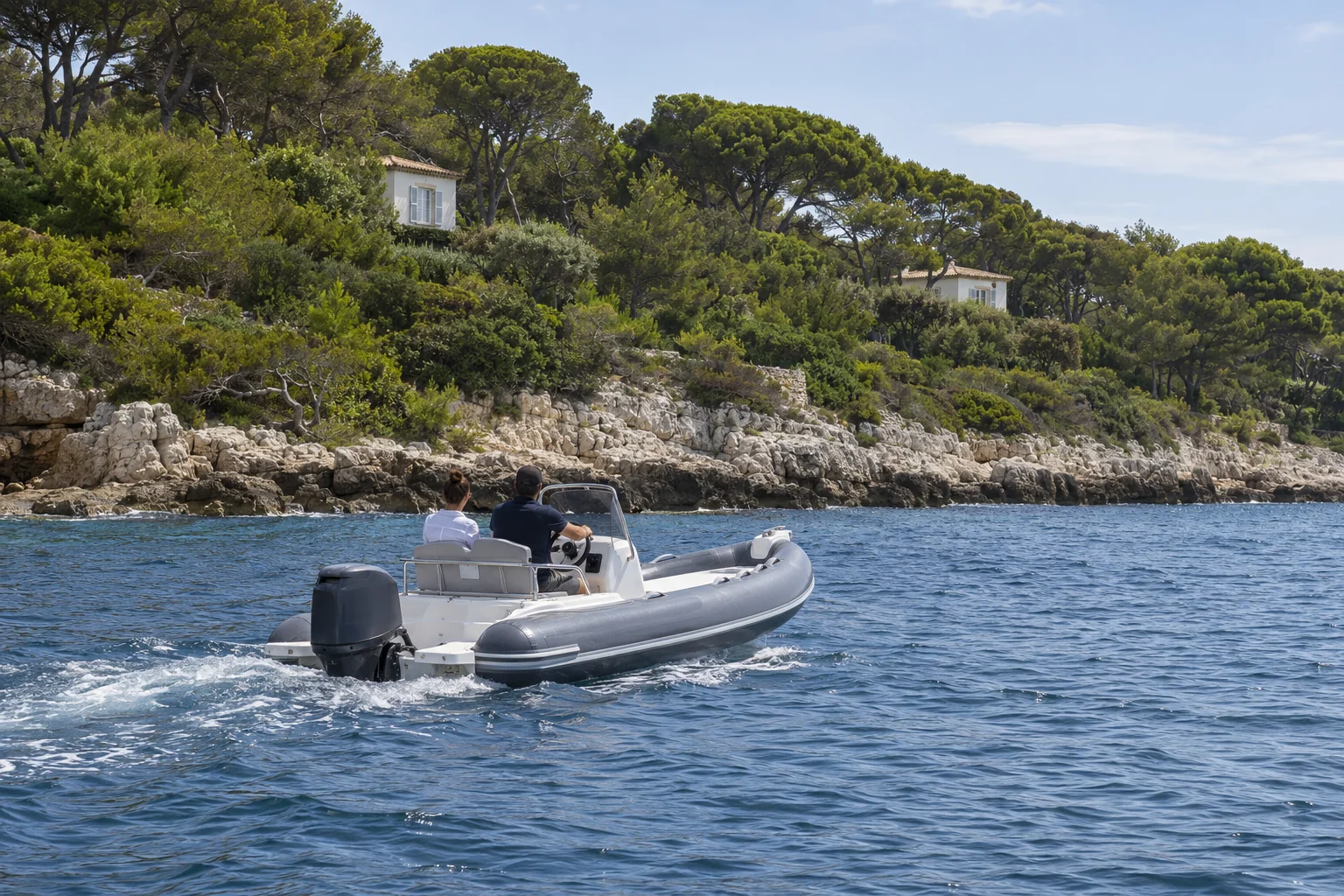
The cape asks for a little more power, because the swell can build off the headland. A RIB or a skippered boat rounds the point in comfort, passes the grand waterfront estates and stops in a cove for a swim before returning through the bay.

RIB cruising past the villas and rocks of the Cap d'Antibes

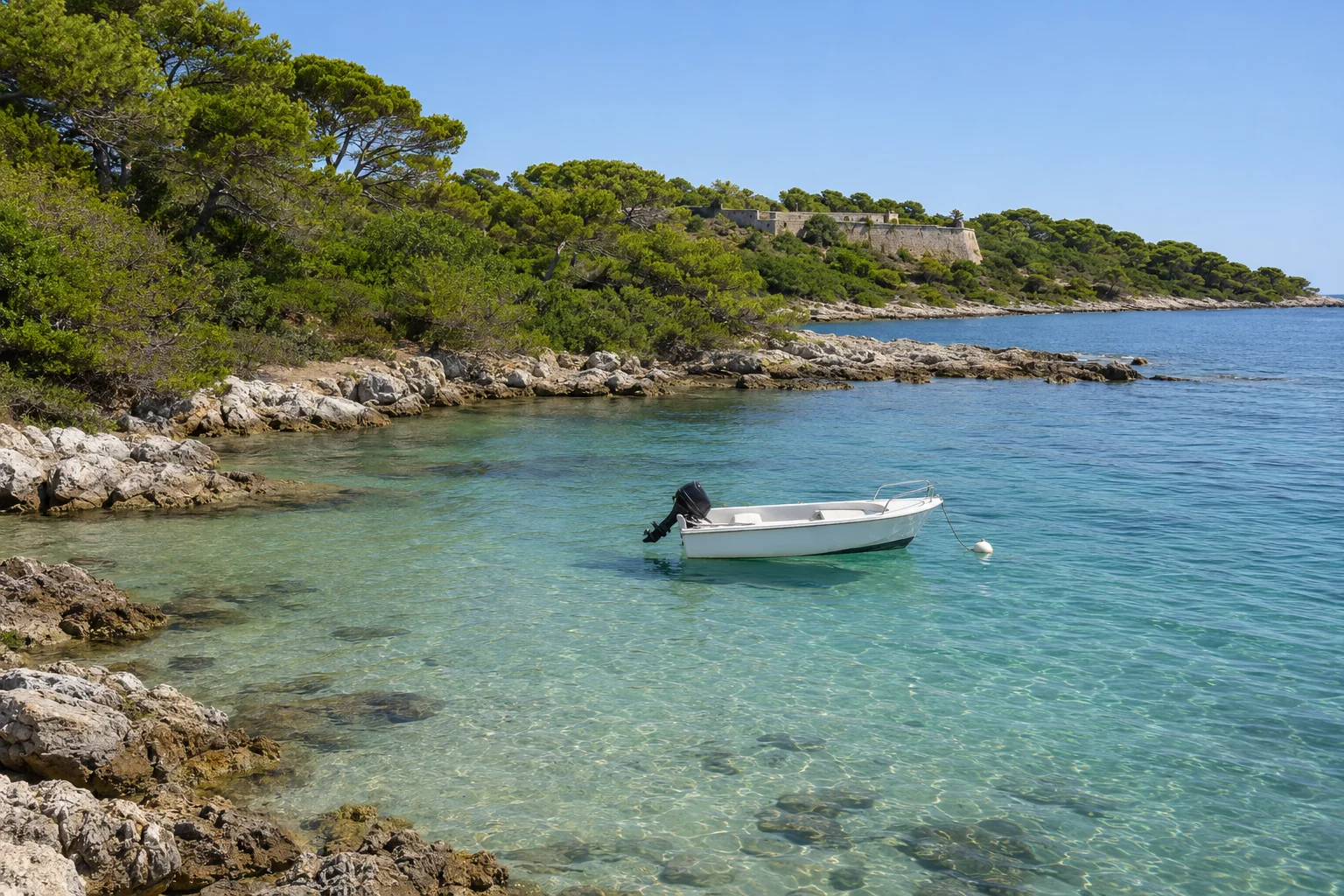
The Lérins Islands lie roughly 30 minutes from Port Vauban by boat, and less from Golfe-Juan. A crossing needs a boat with some power and a helmsman who is comfortable with currents and the regular traffic of passenger shuttles. Once there, the coves of Sainte-Marguerite and the circuit around Saint-Honorat make a memorable half day. The guide to the Lérins Islands from Antibes covers landing options, ferry crossings and permitted anchorages, which helps when you want to combine a boat day with a visit ashore.

Boat anchored off one of the Lérins Islands in clear water

What a day on the water costs in 2026

Prices vary with engine power, rental length, season and the presence of a skipper. The figures below come from listings published in 2026 for departures from Antibes and Juan-les-Pins, and they translate into four typical budgets.

A couple on a licence-free boat for half a day pays from about €70 to €120 for the boat, plus a fuel package of around €10. A deposit of roughly €1,000 is held on a bank card and released when the boat returns undamaged.

A family of five on the same type of boat for a full day pays around €180, plus about €20 of fuel, which works out at roughly €40 per person for a day at sea. This is the most economical way to enjoy the bay with children.

Experienced skippers who hold a licence can hire a 6 m RIB with 115 to 130 hp for roughly €300 to €500 a day depending on the season. Fuel is charged on top, the tank holds 130 to 140 litres, and the deposit starts at around €2,000.

A group of eight who prefer a turnkey outing can book a skippered RIB, with listings starting at €580 for four hours and between €650 and €800 for eight to nine hours. Some listings include fuel. When a skipper is added to a boat hire, plan on about €250 per day.

Two habits keep the bill down: choose a weekday or a shoulder-season date outside the two central weeks of August, and share the boat among six to eight people. Read the cancellation terms before paying, because some owners refund 70% up to five days before departure while others offer flexible cancellation.

Local rules on speed, anchoring and seagrass

Speed limits

Along the French coast, speed is limited to 5 knots within 300 m of the shore, which equals about 9 km/h or 5.6 mph. The local maritime authority’s leaflet for the Alpes-Maritimes states that the limit applies all year and that it holds with or without yellow marker buoys. Between the Lérins Islands the limit is 5 knots in the channel and 3 knots in the anchoring areas, and the bay of Cannes allows 10 knots. A licence-free boat rarely approaches these speeds, but a RIB reaches them in seconds, so keep an eye on the GPS near the beaches.

Anchoring and seagrass

Posidonia meadows, a protected marine plant that filters the water and shelters fish, cover large parts of the seabed. Dark patches on the surface of clear water reveal them, and the golden rule is to drop the anchor on pale sand only. In the Croûton cove, on the Cap d’Antibes, an organised mooring area replaces the anchor with 47 ecological buoys for boats under 24 m, installed from mid-April to mid-October. In winter, nine buoys stay available until April, and anchoring remains prohibited throughout this protected area: boats tie up to a buoy and keep the anchor on board.

Swimmers and divers

Yellow buoys mark swimming zones, which are reserved for bathers. Keep well clear of them, approach beaches slowly and watch for snorkellers around the rocks. Wearing a life jacket and attaching the engine cut-off cord to your wrist are habits that cost nothing and matter a great deal. Check the marine forecast the evening before and again before leaving the dock, because the afternoon breeze can turn a calm bay into a choppy one.

The best time of year to hire a boat in Antibes

The boating season runs from April to October. Each month has its own character, so the table helps match the date to the kind of trip you have in mind.

PeriodWhat to expect
April and MayQuiet bays, fresh air and soft light, ideal for sightseeing rather than swimming
JuneWarming sea, long evenings and wide availability among renters
July and AugustThe busiest weeks, with the highest prices and boats booked several weeks ahead
SeptemberWarm water, fewer boats and generally the best mix of conditions
OctoberCalm and quiet, with the Croûton buoys still in place until mid-month

Within a single day, mornings deliver the smoothest sea and the gentlest light, which suits the crossing to the Lérins Islands or a tour of the cape. The afternoon breeze usually enlivens the bay, so a swim stop in a sheltered cove works well after lunch. Leaving the marina around 09:00 or 10:00 leaves the best hours for exploring.

What to pack

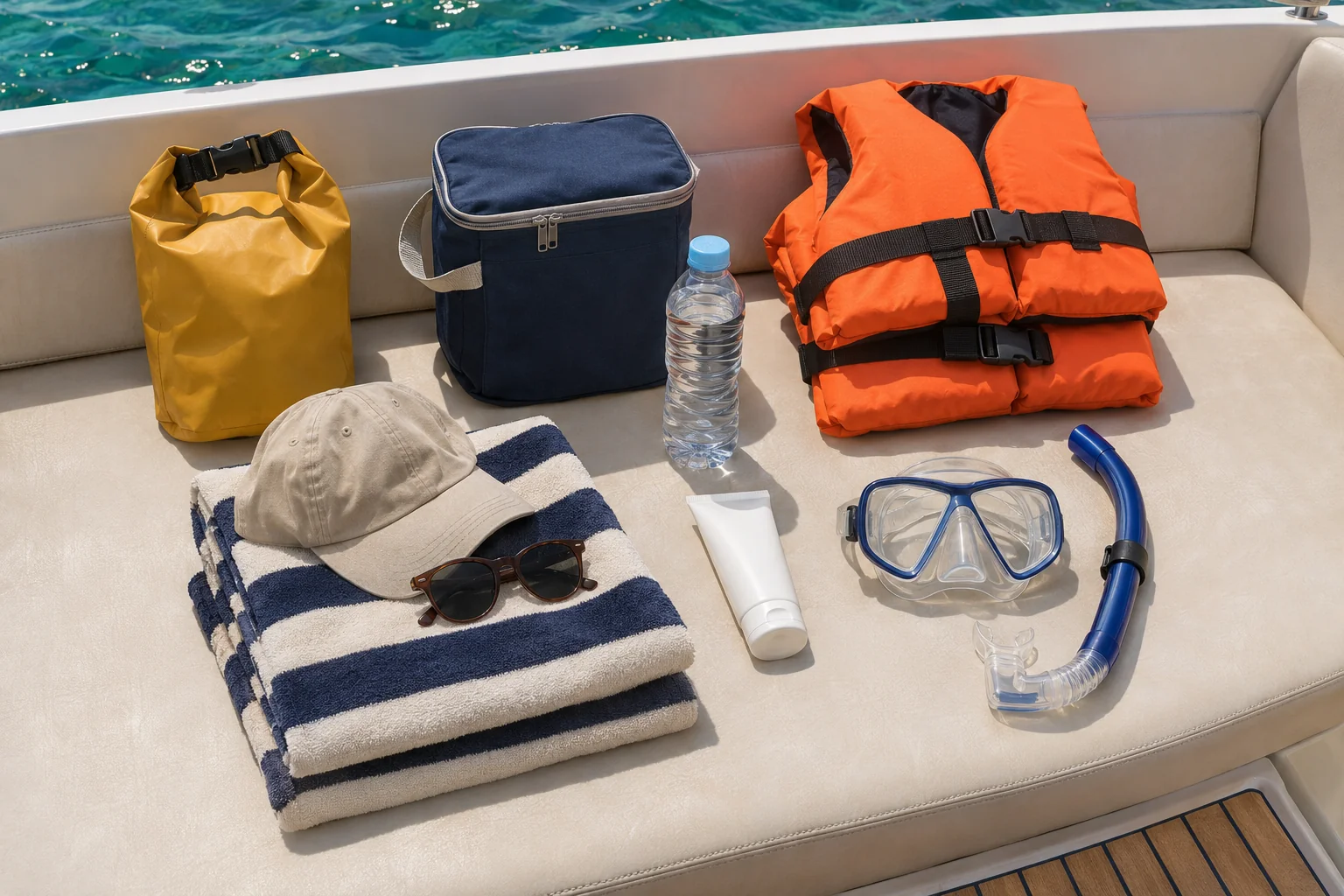
The owner provides life jackets, mooring lines and the mandatory safety equipment. A light bag covers the rest:

Mask, towels, cooler and life jackets ready for a day out on the boat
  • Sunscreen, a cap and polarised sunglasses, because the glare on water intensifies the sun
  • Plenty of water, a soft cooler and a picnic
  • A mask and snorkel for the coves
  • Towels, dry clothes and a waterproof pouch for your phone
  • Photo ID, your licence if you hold one and a bank card for the deposit

If children are joining, tell the owner in advance so that suitably sized life jackets are ready on the dock.

Frequently asked questions about boat rental in Antibes

Can I rent a boat in Antibes without a licence?

Yes, as long as the engine delivers 6 hp (4.5 kW) or less. The owner gives a briefing of 10 to 15 minutes, and then you steer freely around the bay. Most departures leave from Port Gallice, in Juan-les-Pins.

Is my UK or US boating licence accepted?

Boats for hire in Antibes fly the French flag, so French rules apply. Many owners welcome an ICC or a national certificate, but each one makes its own decision. Send a copy of your licence before you book and request written confirmation.

How old do I need to be to hire a boat?

Owners generally ask the person who signs the contract to be an adult and to show photo ID. Younger guests are welcome as passengers with a life jacket that suits their weight. A French coastal licence is available from the age of 16.

How many people can come aboard?

Licence-free boats carry 4 to 7 people, and a small open boat of 4.8 m takes five. A 6 m RIB holds 10 to 12 people, and yachts with a skipper can carry more. The maximum appears in the listing and applies to children as well as adults.

Is fuel included in the price?

It depends on the listing. Small licence-free boats usually have a fuel package of about €10 for half a day or €20 for a full day, paid on site before departure. On a RIB, fuel is generally charged according to what you use, while some skippered trips include it in the price.

Can I sail to the Lérins Islands?

Some owners allow it for licence-free boats, while others keep them inside the bay, so a quick message before booking settles the point. For a comfortable crossing, a RIB or a skippered boat provides more power, and leaving from Golfe-Juan shortens the distance.

What happens if the weather turns?

The owner follows the marine forecast and can postpone or cancel a trip when the sea becomes too rough. Refund conditions are listed in each offer: some refund 70% up to five days before departure, others offer flexible cancellation. Read them before paying, especially in peak season.