Antibes parking rules, blue zones and how to pay

Street parking in Antibes works with pay and display meters, a free first hour and a maximum stay of 3h15, rather than the blue disc used in classic blue zones. You type your car’s registration number into the meter keypad, collect a free one hour ticket, and pay once you need longer. The town also publishes clear free periods, which makes planning a day out much easier.

This guide is written for visitors, with or without a rental car. It explains how to use a meter step by step, when you pay and when parking is free, how blue zones and parking discs work elsewhere in France, which payment methods to expect, and what happens when a parking charge notice follows you home.

How paying for parking works in Antibes at a glance

Antibes splits its parking into free spaces and paid spaces, and the paid ones are managed by meters rather than discs. On its page Stationner en ville (in French), the town counts 3,022 free spaces, including 38 for people with reduced mobility, and 7,325 paid spaces, of which 5,412 sit in 22 car parks away from the street.

Street parking is built around one generous rule: the first hour is free for everyone. Entering your registration number on the meter keypad unlocks it, and you can stay up to 3h15 in total, free hour included. Meters take coins, bank cards and contactless cards, and the town also mentions a mobile payment app.

Paid hours run on weekdays from 9am to 12pm and from 2pm to 6pm. Lunchtime between 12pm and 2pm, evenings from 6pm to 9am, weekends and public holidays are free. Keeping these windows in mind makes most visits to the old town or the seafront very affordable.

Blue zones, with a disc on the dashboard, exist in many French towns. The town’s own pages describe meters and car parks, so the sign on the street remains the final word. For a wider view of car parks, prices and neighbourhoods before you set off, parking in Antibes maps out the main options.

Using an Antibes meter step by step

An Antibes meter takes about a minute to use once you know the order of the screens. The town fitted its street meters with alphanumeric keypads, which is what makes the free first hour possible.

  1. Find the nearest meter on your street and look at the first screen, where you choose a user category.
  2. Press 1 if you are a standard user. Categories 2, 3 and 4 are for people with reduced mobility and health professionals, residents with a subscription, and mobile professionals.
  3. Type your car’s registration number exactly as it appears on the plates, letters and digits included.
  4. Confirm to receive the free one hour ticket, or choose a longer stay and pay with coins, a bank card or a contactless card.
  5. Place the ticket in your car as the meter instructs, and note the expiry time so you are back before it.
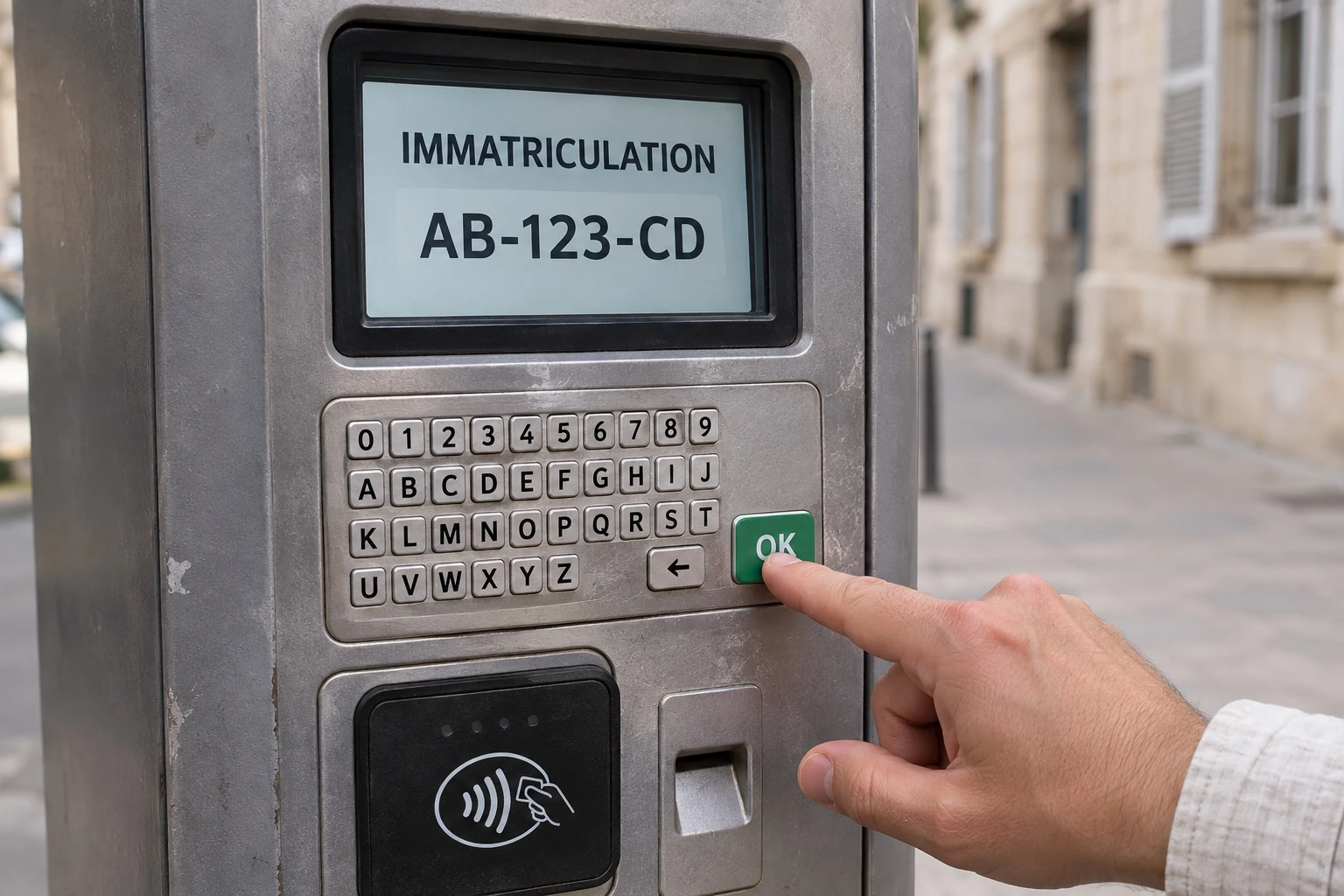
The free hour is issued once a day for each vehicle, so a second visit later the same day is paid in the normal way. The maximum stay on the street is 3h15, free hour included, which suits shopping, a long lunch or a stroll along the ramparts.

Meters in the seasonal car parks near the beaches follow their own price lists. The free hour belongs to street meters, so pick one of those when you want to use it.

Driver’s hand typing a registration number on a parking meter keypad

When you pay and when parking is free

The rhythm of the day matters more than the price list in Antibes. The town charges for street parking in two weekday blocks and leaves the rest of the week free, so a little planning can turn a day out into a very inexpensive one.

WhenOn-street parkingHandy for
Weekdays, 9am to 12pmPaid, first hour freeMorning errands and coffee
Weekdays, 12pm to 2pmFreeA long lunch
Weekdays, 2pm to 6pmPaid, free hour if still available that dayAfternoon sightseeing
Every day, 6pm to 9amFreeDinner and an evening walk
Weekends and public holidaysFree all dayBeach days and old town visits

For the paid blocks, the town states that the free first hour combines with low rates: two hours cost €2 and three hours cost €3, free hour included. These figures come from the town’s own page, so a glance at the meter on the day confirms the current prices.

Public holidays are worth a look at the calendar before you travel. In France, days such as 14 July, 15 August, 1 November and 11 November count as public holidays, which means free street parking all day, and the car parks near the coast can fill early on summer holidays.

How blue zones and parking discs work in France

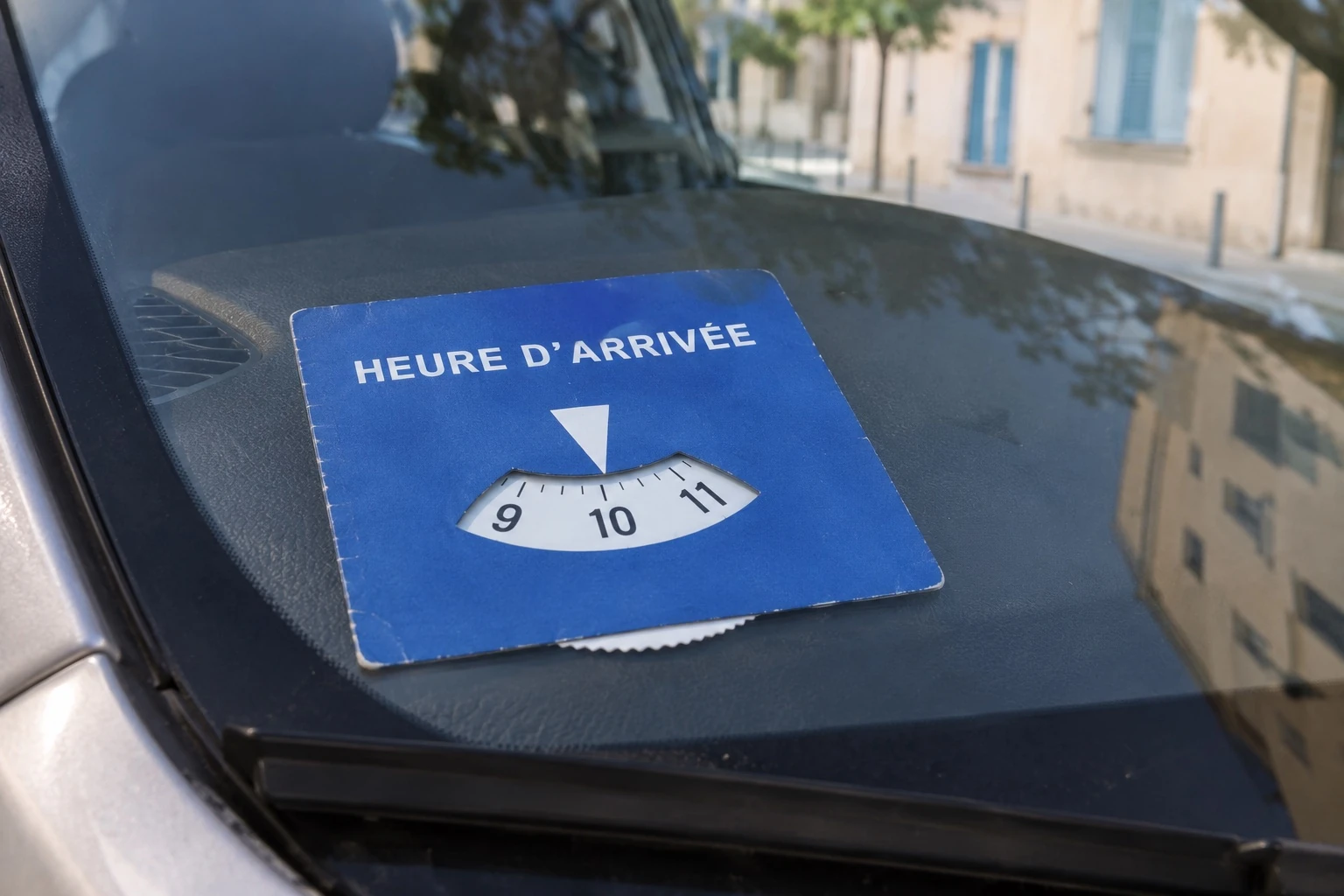
A blue zone (zone bleue) offers free parking for a limited time, as long as a parking disc sits on your dashboard. Many towns on the Riviera use them, so even a trip centred on Antibes can bring you across one in a neighbouring resort or a village on the way.

The disc is the blue European model. You set it to your arrival time and display it behind the windscreen. According to The Connexion, local authorities set the maximum stay, shown on the sign, typically between 15 and 90 minutes, and parking is usually free on Sundays and public holidays. Discs cost a few euros in garages, supermarkets and online.

Overstaying or parking without a disc can bring a fine of €35. Blue zones are separate from disabled bays: staying beyond the time limit requires a French or European disability parking card, and The Connexion advises checking in advance, as acceptance of UK badges can vary after Brexit.

In Antibes, the town’s pages for street parking describe meters and tickets, and the sign on each street gives the local rule. A disc in the glovebox costs little and keeps a road trip along the coast relaxed.

Blue parking disc placed behind the windscreen of a car

Paying by card, contactless or app

Meters in Antibes accept coins, bank cards and contactless cards, so a standard payment card from home is the simplest tool. A handful of euro coins makes a handy backup, particularly for a short stop.

The town’s page also mentions mobile payment through the Flowbird app. In France, Flowbird is being replaced by EasyPark in many cities, so the app name on your phone may differ from the name on the page. Before you rely on it, open the app, create an account and check that the Antibes zone appears in the list, ideally with a card registered in advance.

Parking apps can add service fees. French consumer group UFC-Que Choisir reported in December 2025 that some apps charge around 15% of the parking amount in certain cities, with a minimum and a maximum per transaction, while some subscription plans remove these fees. The first free hour is described by the town for the keypad on the street meter, which makes the meter the most reliable way to claim it.

A quick look at the terms of your chosen app before you travel lets you compare its cost with the displayed tariff at the meter.

Street parking or a car park, which costs less

For visits of up to three hours on a weekday, the street meter is usually the cheapest option, thanks to the free first hour. Longer plans change the answer, and the table below shows which option fits which kind of day.

OptionBest forGood to know
Street meterWeekday visits up to 3h15, any visit outside paid hoursFirst hour free, once a day for each vehicle
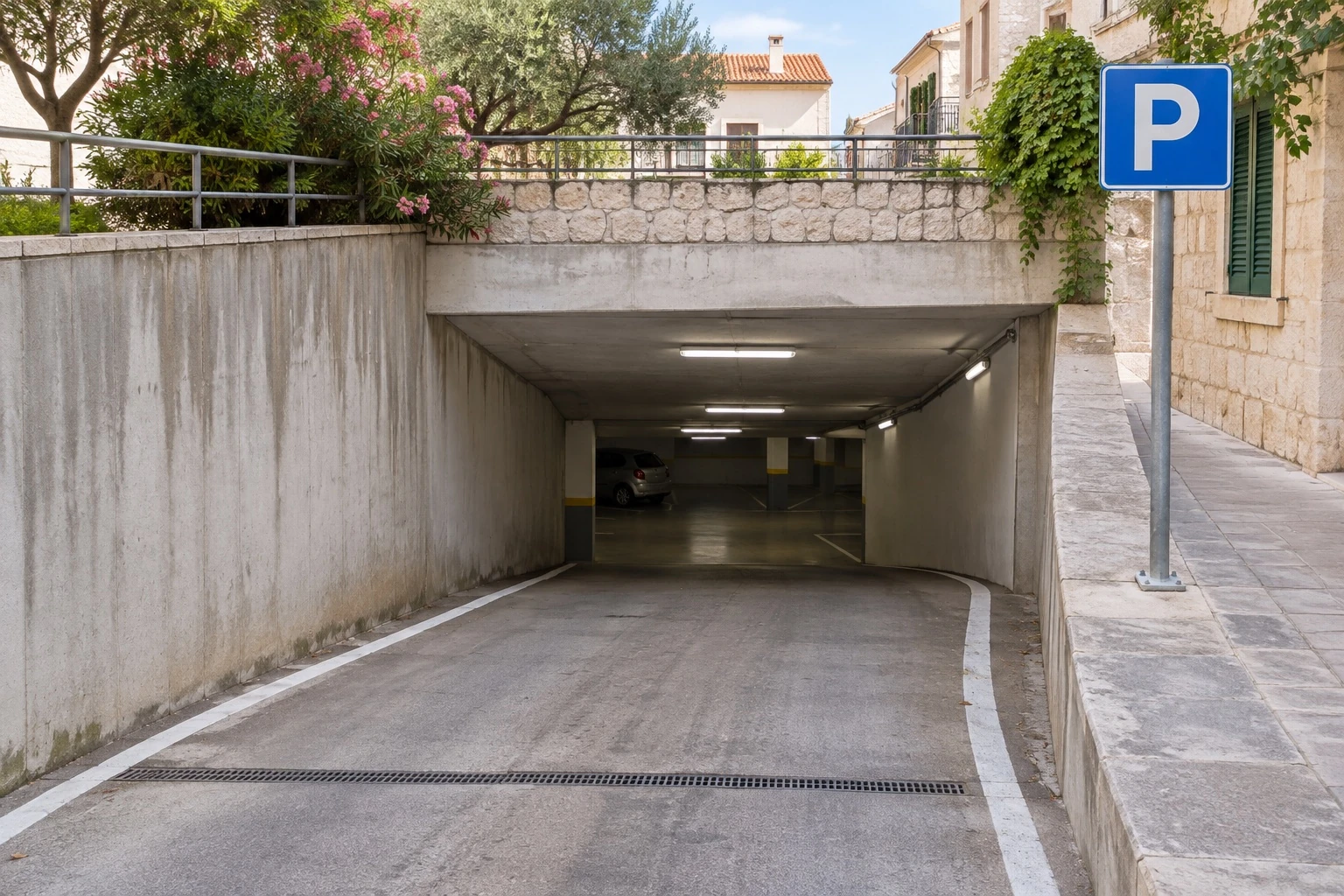
Underground car park in the centreHalf days in the old townMédiathèque, Frères Olivier and La Poste offer 2 free hours on Wednesdays, Saturdays and Sundays outside July and August
Seasonal beach car parkBeach days in summerOwn meters and price lists, separate from the street free hour
Free car park on the edge of townLonger staysFree for up to 48 hours, which the town uses to keep spaces turning over

The town lowered the prices of its most used car parks in January 2024, so the underground options now suit visitors who plan a leisurely lunch and a long afternoon. For a visit built around the ramparts, parking in Old Antibes compares the closest car parks and their walking times.

One fact keeps the decision simple: the street maximum is 3h15, while a car park lets you stay as long as your day requires.

Bright entrance of an underground car park in the centre of Antibes

Rental cars, foreign plates and parking charges

When a stay runs over the time paid for, France issues a forfait post-stationnement (FPS), a parking charge set by the town. In Antibes it amounts to €15 according to fps-stationnement.fr. The notice is addressed to the registered keeper of the vehicle, which for a rental car is the rental company. The company can pass the charge on to the driver, sometimes with an administrative fee set out in the rental contract, so photographing your ticket and the meter display gives you a useful record.

The official guidance on service-public.gouv.fr sets three clear deadlines. The charge can be paid within 3 months of the notice, and the notice carries a payment reference for the national portal stationnement.gouv.fr. A challenge goes through a mandatory administrative appeal within 1 month of the notice, and the appeal does not pause the 3 month payment period. After 3 months, a surcharge of 20%, with a minimum of €50, is added, which brings an Antibes charge to €65 in total.

A few habits keep the rental experience smooth. Note the free hour and the expiry time on your ticket, set a phone reminder ten minutes earlier, and keep the ticket until the car is back at the rental desk. If plans change, return to the meter before the ticket expires and keep the 3h15 maximum in mind.

Free spaces, electric cars and disabled badges

Antibes offers plenty of free parking: the town counts 3,022 free spaces on streets and in car parks. According to its open data file, several large open air car parks on the edge of town are free, including the two Fort Carré car parks, the AzurAréna and the Espace Jean Bunoz. Their free parking is limited to 48 hours so that spaces keep turning over, which suits a weekend stay or a long day trip.

Electric cars also benefit: the town states that parking on the street is free for electric vehicles. Street signs give the details for each location, so a quick look before leaving the car is a sensible habit.

People with reduced mobility and health professionals have their own category on the meter, reached by pressing 2 at the first screen. Visitors who hold a disability badge from another country should confirm in advance how it is recognised locally, because The Connexion points out that acceptance of UK badges can vary after Brexit.

For a closer look at which free car park fits which outing, free parking in Antibes sorts the options by distance on foot and by type of day.

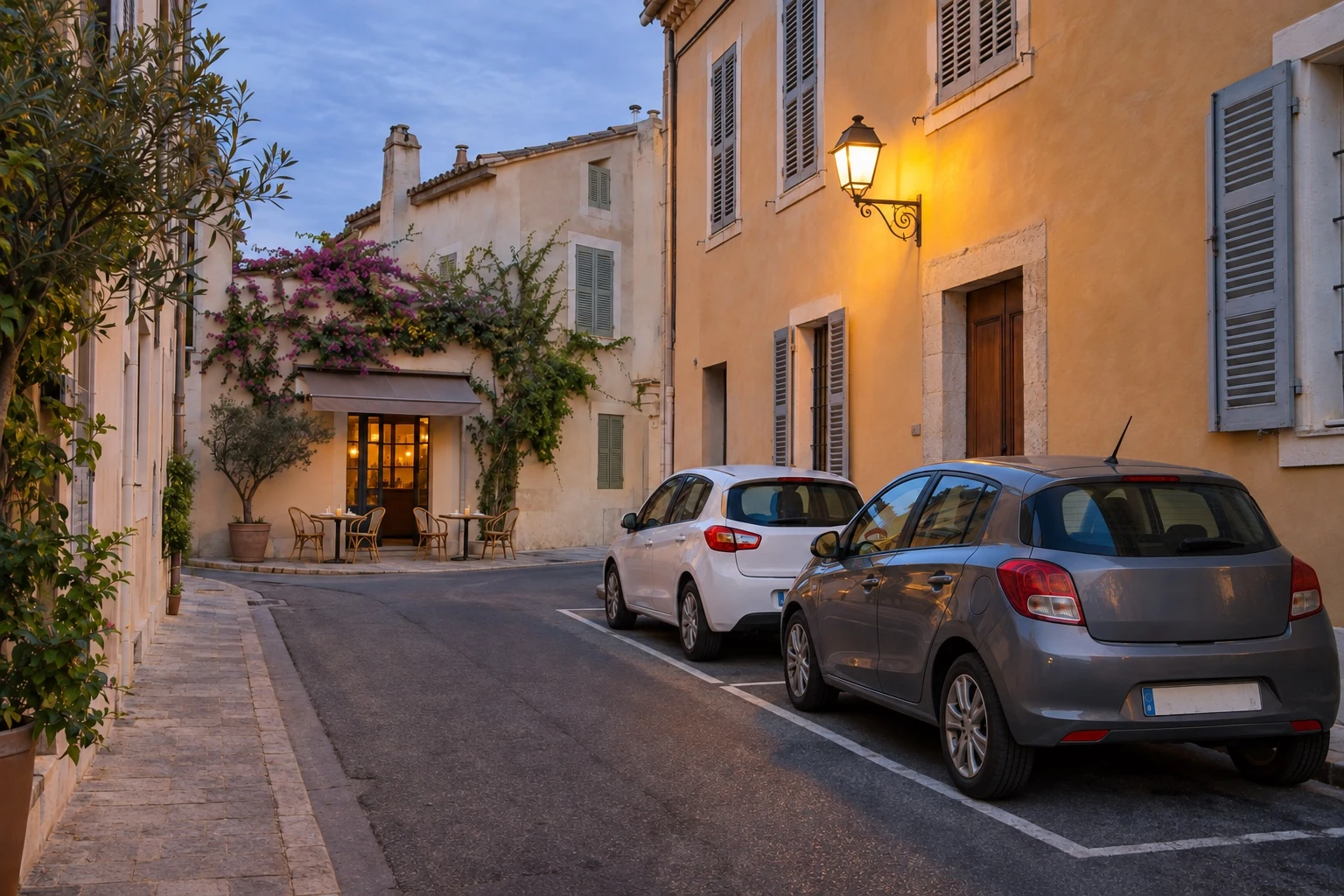
Old Antibes lane at dusk with parked cars and lit restaurant terraces

Choosing the right option for your day in Antibes

A quick weekday errand or a coffee on the way to the market suits a street meter. The free first hour covers most short visits, and the 3h15 maximum leaves room for an unhurried lunch.

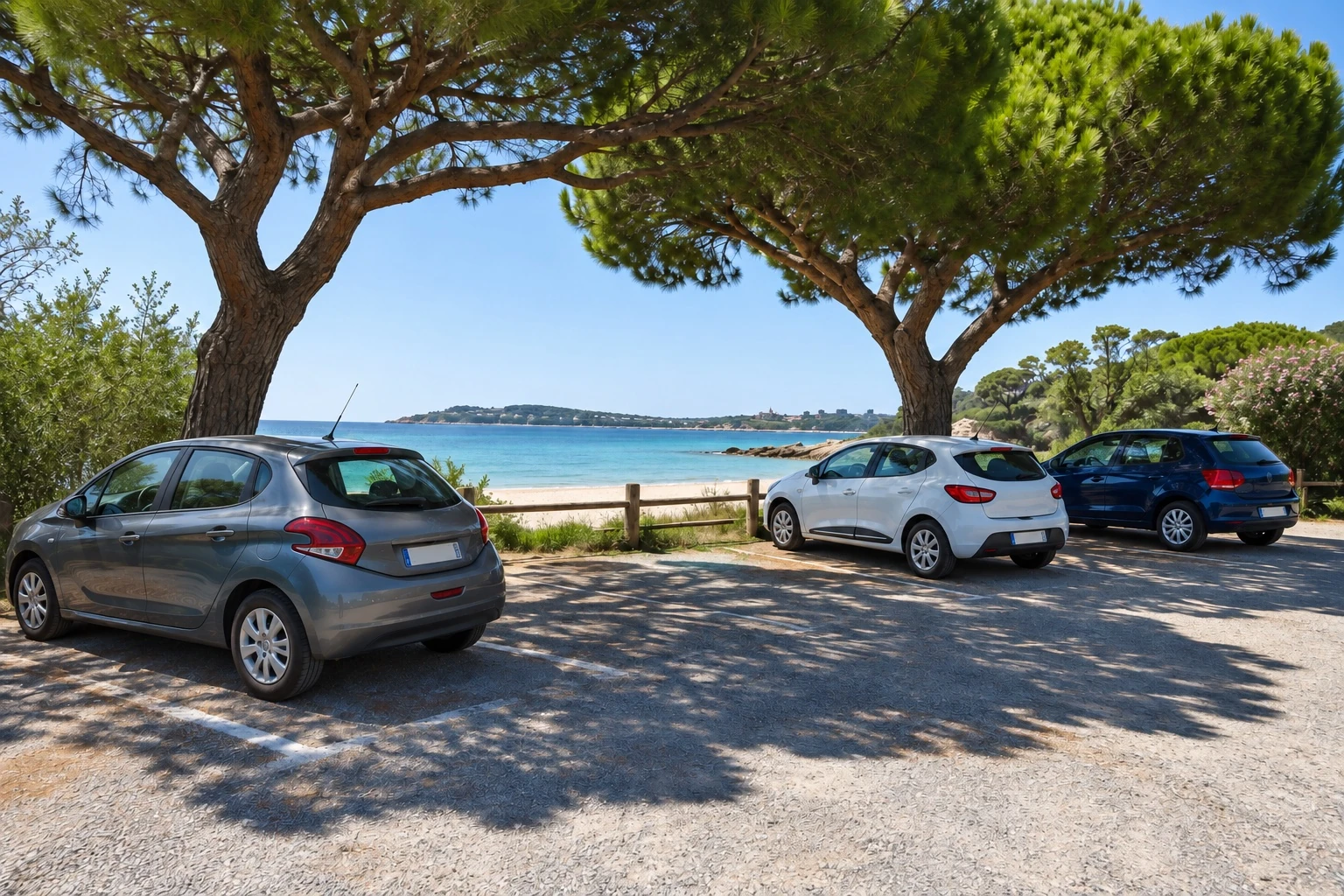
Heading to the beach in July or August? A car park fits the rhythm of the day better. Spaces near the coast fill early in high season, and the seasonal car parks follow their own price lists. A practical alternative is to leave the car at the Fort Carré park and ride, then take the free NFC shuttle of the Envibus network to Porte Marine, which runs daily on the season’s timetable.

Evenings in the old town or in Juan-les-Pins are the easiest of all, since street parking is free from 6pm to 9am. Weekends and public holidays work the same way all day long, so a Saturday stroll through the old town comes with free street parking. Reading the sign of your street remains wise, especially during events or roadworks. Once the car is parked, getting around Juan-les-Pins is mostly a matter of walking, with the train, local buses and taxis covering longer hops and late evenings.

On a stay of several days, the car can rest in the car park of your accommodation or in a free edge of town car park limited to 48 hours, while buses carry you around. An Envibus ticket costs €1 and a day pass €3.50, a small budget for reaching the centre, the beaches and the station.

Pine shaded car park next to a French Riviera beach in summer

Frequently asked questions about parking in Antibes

The answers below cover the essentials before you park and pay in Antibes.

Is there a blue zone in Antibes?

The town describes meters with free and paid spaces. A blue sign with a disc symbol would mark a blue zone for that street, so the sign you see on arrival gives the local rule.

How do I get the free hour of parking in Antibes?

Press 1 at the meter, type your registration number on the keypad and confirm. The free hour is issued once a day for each vehicle on street meters.

Can I pay for parking in Antibes with a bank card?

Yes. Meters accept coins, bank cards and contactless cards, and the town also mentions a mobile app. A few euro coins make a handy backup.

How long can I park on the street in Antibes?

The maximum stay is 3h15, free hour included. A car park offers more flexibility for longer plans.

Is parking free on Sundays and public holidays?

Yes, street parking is free on Saturdays, Sundays and public holidays, and on weekdays between 12pm and 2pm and from 6pm to 9am. Seasonal car parks have their own rules, shown on site.

What happens if I stay longer than the time I paid for?

A parking charge notice of €15 can follow, sent to the registered keeper of the car. For a rental car, that is the rental company, so keep your ticket and check the contract.

Do I need a parking disc in Antibes?

The town’s information relies on meters and tickets. A European parking disc remains a useful item in the glovebox for neighbouring towns that use blue zones.